
Delving into the realm of maintenance costs unveils a complex web of influences and decisions that can significantly impact the financial health of any operation. From identifying key factors to implementing cost-effective strategies, this discussion aims to provide valuable insights into managing maintenance expenses efficiently.
As we navigate through the various aspects of maintenance costs, we will uncover essential tips and best practices that can help streamline operations and optimize budget allocation.
Factors Affecting Maintenance Costs
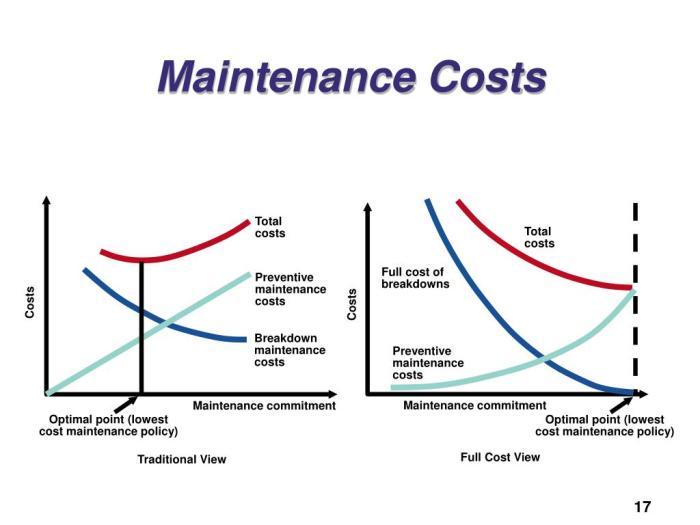
When it comes to maintenance costs, there are several factors that can influence the overall expenses involved. These factors can vary depending on the type of equipment or machinery being used and the maintenance practices implemented.
Equipment Type
The type of equipment or machinery being used plays a significant role in determining maintenance costs. More complex machinery with intricate components may require more frequent maintenance and specialized technicians, leading to higher expenses.
Preventive Maintenance
Implementing a robust preventive maintenance program can help reduce overall maintenance costs in the long run. By regularly inspecting and servicing equipment before any major issues arise, businesses can avoid costly repairs and downtime.
Strategies to reduce maintenance costs
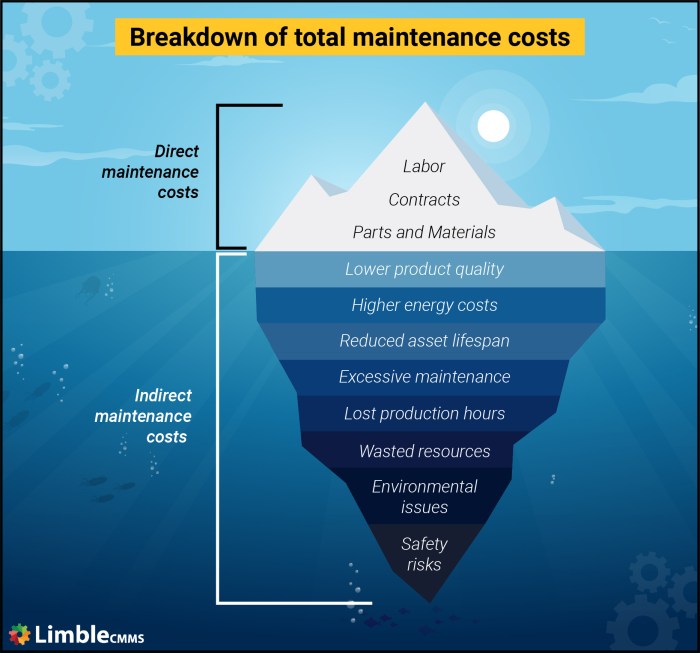
Reducing maintenance costs is crucial for optimizing operational efficiency and maximizing profitability. By implementing cost-effective maintenance strategies, businesses can ensure their equipment and facilities are well-maintained without breaking the bank. Let's explore some key strategies to help minimize maintenance costs and improve overall cost-effectiveness.
Cost-Effective Maintenance Strategies
- Regular Inspections and Maintenance Checks: Conducting regular inspections and preventive maintenance checks can help identify potential issues early on, preventing costly breakdowns or repairs.
- Training and Skill Development: Investing in training programs for maintenance staff can help improve their skills and knowledge, leading to more efficient and effective maintenance practices.
- Implementing Predictive Maintenance: Utilizing advanced technologies such as sensors and software for predictive maintenance can help predict equipment failures before they occur, allowing for timely repairs and minimizing downtime.
- Optimizing Maintenance Schedules: Developing a well-planned preventive maintenance schedule based on equipment usage and manufacturer recommendations can help extend the lifespan of assets and reduce overall maintenance costs.
Reactive vs Proactive Maintenance
Reactive maintenance involves fixing equipment only when it fails, leading to higher repair costs and unexpected downtime. On the other hand, proactive maintenance focuses on preventing failures through regular inspections and preventive measures, reducing overall maintenance costs and improving equipment reliability.
Preventive Maintenance Schedule
| Activity | Frequency |
|---|---|
| Equipment Inspections | Weekly |
| Lubrication | Monthly |
| Filter Replacement | Quarterly |
| Calibration | Bi-annually |
Maintenance cost tracking and analysis
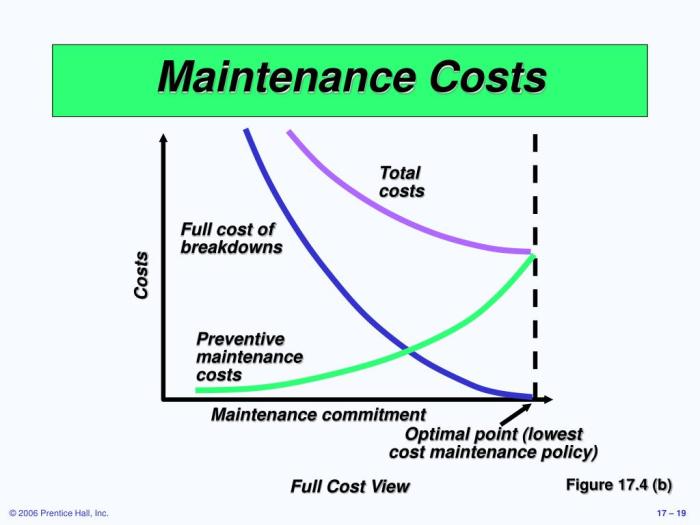
In order to effectively manage maintenance costs, it is crucial to track and analyze expenditures to identify areas for improvement and cost-saving opportunities.Explain the importance of tracking maintenance expenditures:Tracking maintenance expenditures allows businesses to have a clear overview of where their money is being spent.
It helps in identifying trends, patterns, and areas of overspending, enabling better decision-making and cost control measures.Provide examples of key performance indicators (KPIs) used to analyze maintenance costs:
Mean Time Between Failures (MTBF)
This KPI measures the average time a piece of equipment operates before experiencing a breakdown, indicating maintenance effectiveness.
Maintenance Cost as a Percentage of Replacement Asset Value (RAV)
This KPI compares maintenance costs to the total value of assets, providing insight into cost efficiency.
Planned Maintenance Percentage
This KPI evaluates the percentage of maintenance activities that are planned in advance, helping to reduce reactive maintenance costs.Organize a detailed breakdown of maintenance expenses for better cost management:
| Category | Percentage of Total Cost |
|---|---|
| Labor | 40% |
| Materials | 30% |
| Contracted Services | 15% |
| Tools and Equipment | 10% |
| Other Expenses | 5% |
By breaking down maintenance expenses into categories, businesses can identify areas with the highest costs and implement strategies to optimize spending efficiently.
Outsourcing vs. in-house maintenance
Outsourcing maintenance services versus having an in-house team is a decision that companies often have to make. Each option comes with its own set of costs and benefits that can significantly impact the overall maintenance expenditures.
Costs and Benefits Comparison
When comparing outsourcing maintenance services with having an in-house team, it is essential to consider the financial implications. Outsourcing may seem cost-effective initially as it eliminates the need for hiring and training specialized staff, purchasing equipment, and setting up maintenance facilities.
On the other hand, in-house maintenance provides more control over the quality and timing of maintenance activities but comes with higher upfront costs and ongoing expenses.
Impact on Overall Maintenance Expenditures
Outsourcing maintenance can have a significant impact on overall maintenance expenditures, depending on the nature of the services required and the frequency of maintenance activities. While outsourcing may reduce direct labor costs, it can lead to additional expenses in terms of service contracts, transportation, and coordination.
In-house maintenance, although more expensive upfront, can result in long-term cost savings through better asset management and reduced downtime.
Decision-Making Framework
When deciding between outsourcing and in-house maintenance, companies should create a decision-making framework based on cost considerations. This framework should include an analysis of the specific maintenance needs, the availability of skilled labor, the cost of equipment and materials, and the potential impact on overall operational efficiency.
By weighing these factors carefully, organizations can make an informed decision that aligns with their budget and maintenance objectives.
Summary
In conclusion, understanding the nuances of maintenance costs is crucial for any organization looking to enhance its bottom line. By tracking expenditures, implementing proactive strategies, and making informed decisions about outsourcing, businesses can effectively control and minimize maintenance costs in the long run.
Question Bank
What are the key factors that influence maintenance costs?
Factors such as equipment age, usage intensity, and maintenance history can significantly impact maintenance costs.
How does preventive maintenance contribute to reducing overall costs?
Preventive maintenance helps in identifying and addressing issues before they escalate, thus reducing the need for costly repairs and downtime.
What are some common key performance indicators (KPIs) used to analyze maintenance costs?
KPIs like mean time between failures (MTBF) and maintenance cost per unit are commonly used to gauge maintenance cost efficiency.
What factors should be considered when deciding between outsourcing and in-house maintenance?
Factors such as expertise availability, cost-effectiveness, and the complexity of maintenance tasks should be evaluated when choosing between outsourcing and in-house maintenance.